Human-Relevant Organoid Platforms for Translational Research
KYAH Healthcare supplies batch-validated, high-purity 3D organoid platforms. Engineered to replicate tissue-level microarchitecture and cellular diversity, our neural and oncology models provide predictive physiological data for drug discovery and disease research.
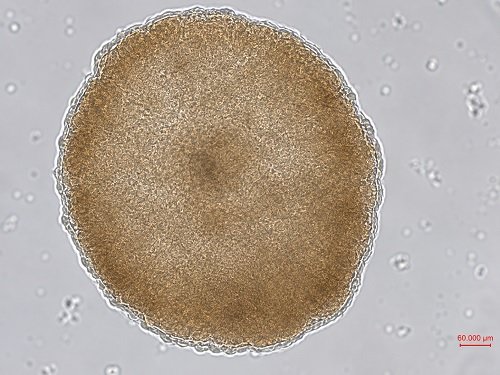
Standardized Organoid Systems
Brain Organoids
iPSC-derived 3D cerebral models featuring organized cytoarchitecture, functional synaptogenesis, and glial cell populations for neurotoxicity and disease modeling.
Glioma Organoids
Patient-derived glioblastoma (GBM) 3D cultures retaining parental tumor heterogeneity, invasive cellular margins, and resistance profiling markers.
Fetal Brain Models
Physiologically structured developmental tissue platforms modeling progenitor zone dynamics, radial glia, and early neurodevelopmental pathways.
Co-Culture Systems
Multi-lineage platforms combining parenchymal cells with microglial or vascular endothelial populations for tumor microenvironment analysis.
Technical Specifications & Verification
| Platform Type | Cellular Origin | Validation Markers | Primary Assay Compatibility |
|---|---|---|---|
| Brain Organoids | Human iPSC / ESC lines | PAX6, MAP2, TUJ1, GFAP | Electrophysiology (MEA), High-Content Screening |
| Glioma Organoids | Patient Primary Tissue | EGFR, Nestin, Olig2, Ki-67 | Chemosensitivity, Invasion Profiling |
| Fetal Brain Models | Neural Progenitors | SOX2, BLBP, TBR2, CTIP2 | Gene Expression, Neurodevelopmental Assays |
| Co-Culture Systems | Organoid + Microglia / BMEC | Iba1, CD31, Claudin-5 | Immune Cell Infiltration, BBB Interaction |
Preclinical Applications & Screening Protocols
High-Throughput Toxicity Testing
Standardized 3D microplate integration for ATP viability assays (CellTiter-Glo 3D) and automated LDH cytotoxicity quantification across compound libraries.
Electrophysiology & MEA Assays
Microelectrode array functional recording evaluating baseline field potentials, burst frequencies, and synaptic network responses in mature cerebral organoids.
Immune Infiltration Protocols
Co-culture assay workflows analyzing CAR-T cell migration, microglia recruitment, and cell-mediated cytotoxicity inside physiological ECM hydrogels.
Validation Matrix & Analytical Methods
| Application Focus | Primary Assay Method | Key Target Markers | Readout System |
|---|---|---|---|
| Neurotoxicity Screening | Fluorometric Viability & Caspase 3/7 | TUBB3 MAP2 | Confocal High-Content Imaging |
| Glioma Chemosensitivity | IC50 Profiling & Spheroid Volume | Ki-67 MGMT | Automated Microplate Reader |
| Neurodevelopmental Modeling | Single-Cell RNA-Seq & qPCR | PAX6 SOX2 | Transcriptomic Sequencing |
| Blood-Brain Barrier Analysis | TEER Measurements & Permeability | ZO-1 CD31 | Impedance Spectroscopy |
Technical Specifications & Support FAQ
What Quality Control (QC) documentation is provided?
Every shipment includes a Certificate of Analysis (CoA) detailing mycoplasma-free status, endotoxin levels (< 0.1 EU/mL), viability percentages, and marker expression profiling via transcriptomic sequencing.
How are live organoids preserved during shipping?
Organoids are shipped cryopreserved in optimized freezing media or as live 3D cultures in temperature-controlled, nutrient-supplemented transport media for immediate assay integration.
Are custom co-culture configurations supported?
Yes. Custom cell ratio formulations, gene-edited lines (CRISPR/Cas9), and specific immune or vascular co-culture configurations are available upon technical consultation.
Request Custom Formulations or Assay Integration
Our scientific team provides technical support for microplate integration, custom disease modeling, and high-throughput screening protocols.